Lesson 2 — Introduction to Cycle Time
What Is Cycle Time?
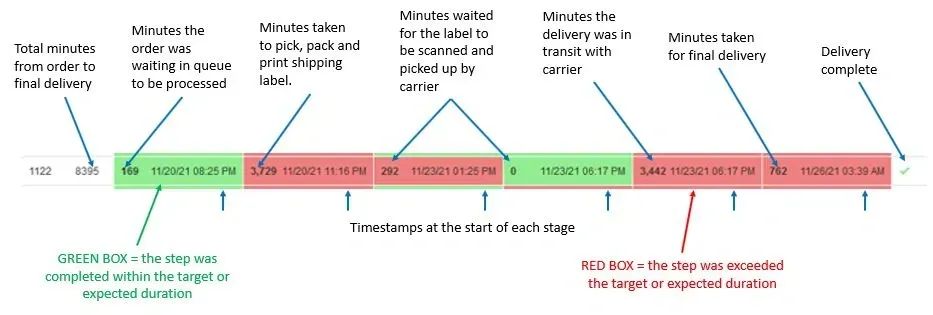
Cycle time is the total amount of time an order spends inside your fulfillment operation — from the moment it becomes ready to fulfill until the moment it leaves your hands.
In simple terms:
Cycle time = How long it takes you to fulfill an order.
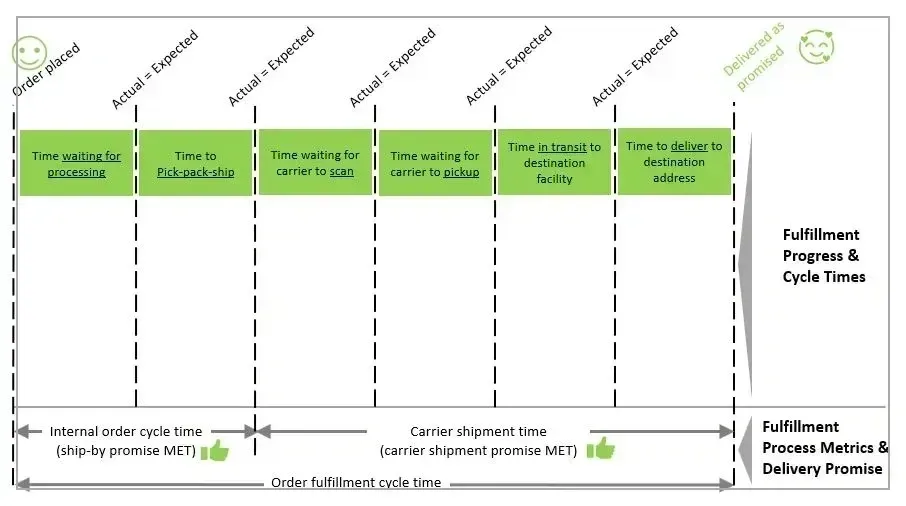
It is the most direct measure of the speed, stability, and health of your fulfillment system.
Everything else — flow, WIP, bottlenecks, throughput, customer experience — ultimately shows up in cycle time.
Cycle Time as the “Metabolic Signal” of Fulfillment
A powerful way to understand cycle time is through a health analogy:
Cycle time is the “blood sugar” of your fulfillment operation.
Just like a continuous glucose monitor (CGM) shows the metabolic state of a human body, cycle time shows the operational state of your fulfillment body.
A CGM tells you:
• how your body is responding
• whether you’re stable or spiking
• whether stress is building
• whether something is off before symptoms appear
Cycle time behaves the same way:
• rising cycle time = operational stress
• stable cycle time = healthy flow
• spiking cycle time = something is breaking
• falling cycle time = flow is improving
Cycle time is your continuous operational health signal.
Why Cycle Time Matters
Cycle time is the most important metric in fulfillment because it directly affects:
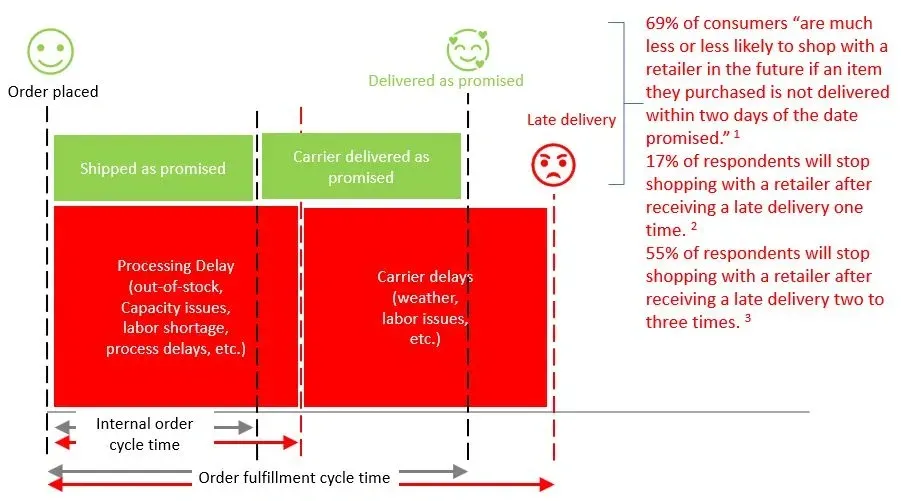
Customer experience
• 73% of customers say speed is the #1 factor in satisfaction
• Every extra day in fulfillment reduces repeat purchase probability by 12–18%
• Late or slow fulfillment is the top driver of negative reviews
Operational cost
• Longer cycle times increase WIP
• Higher WIP increases errors, rework, and overtime
• Unstable cycle times force teams into firefighting mode
Capacity and throughput
• Lower cycle time = higher throughput
• Higher throughput = more orders without more staff
• Stable cycle time = predictable staffing and scheduling
Cycle time is the lever that moves everything else.
Why Cycle Time Is So Hard to Measure (and Why Most Merchants Don’t)
Despite its importance, very few merchants measure cycle time consistently.
Not because they don’t care — but because manual cycle‑time measurement is brutally difficult.
1. It’s labor‑intensive and slow
Teams must:
• track timestamps at each step
• collect data from operators
• reconcile missing entries
• clean and normalize the data
• calculate averages and distributions
This takes days or weeks.
2. It’s usually done only once every few months
Most merchants measure cycle time only:
• during a crisis
• during a warehouse redesign
• during a consulting engagement
• during peak‑season post‑mortems
Meaning: cycle time is measured after the damage is done.
3. Consulting firms are often hired to do it
Because the work is so tedious, many merchants outsource it.
But consultants:
• cost thousands to tens of thousands
• take weeks to collect data
• deliver reports long after the problems occurred
• provide snapshots, not continuous monitoring
It’s like checking your blood sugar once every three months — you miss everything that matters.
4. Manual measurement is always “after the fact”
By the time cycle time is calculated:
• customers have already experienced delays
• negative reviews have already been posted
• operators have already burned out
• overtime has already been paid
• WIP has already piled up
You’re diagnosing the patient after the heart attack.
5. The result: most merchants simply give up
Because the process is so painful, most merchants stop measuring cycle time altogether.
But the price of not measuring it is enormous — and it compounds silently.
The Hidden Cost of Not Measuring Cycle Time
When cycle time is not measured:
• delays go unnoticed
• bottlenecks grow silently
• WIP accumulates invisibly
• operators compensate with heroics
• customers experience inconsistency
• retention drops
• negative reviews increase
• costs rise
• throughput falls
Industry data shows:
• Every extra day in fulfillment reduces repeat purchase probability by 12–18%
• 69% of customers won’t return after a late delivery
• WIP spikes correlate with 2–3× higher error rates
• Unstable cycle time is the #1 predictor of overtime
Cycle time is not just a metric — it is the early warning system for your entire operation.
Top E‑Commerce Leaders Live and Die by Cycle Time
The most successful e‑commerce companies — the ones with the fastest delivery promises, highest repeat purchase rates, and most stable operations — all have one thing in common:
They monitor cycle time continuously.
They treat cycle time the way elite athletes treat heart‑rate variability or how diabetics treat glucose levels:
• monitored constantly
• analyzed daily
• used to predict stress
• used to prevent breakdowns
• used to stabilize performance
Cycle time is their operational CGM.
This is the advantage large, sophisticated e‑commerce operations have always had — and the advantage smaller merchants have never had access to.
FillSpeed Brings This Capability to Shopify Merchants
Historically, continuous cycle‑time monitoring required:
• custom systems
• expensive consultants
• dedicated analysts
• proprietary data pipelines
FillSpeed changes that.
For the first time, Shopify merchants can monitor cycle time continuously, just like the top e‑commerce leaders do.
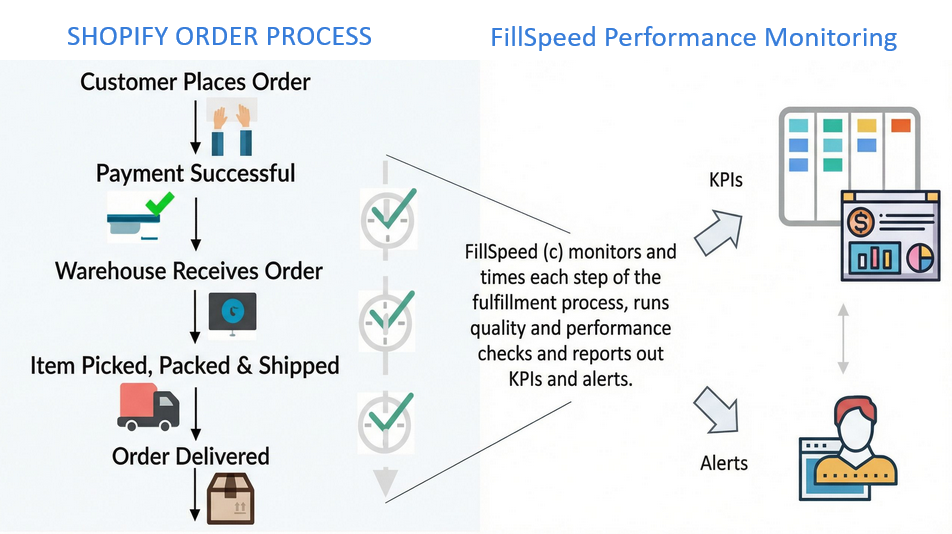
FillSpeed turns cycle time into:
• a live signal
• a daily operational guide
• a predictor of bottlenecks
• a stabilizer of flow
• a driver of customer experience
• a lever for growth
It brings the “big‑company advantage” to merchants who never had the tools, data, or resources to measure cycle time before.
Why This Lesson Matters
Cycle time is the foundation for everything that comes next:
• cumulative averages
• CAR (Cumulative Average Ratio)
• scatter plots
• cumulative flow diagrams
• fulfillment KPIs
• daily operational decisions
If flow is the story, cycle time is the plot.
If flow is the body, cycle time is the blood sugar.
If flow is the system, cycle time is the signal.
Understanding cycle time is the first step toward controlling it — and controlling it is the first step toward building a fast, stable, scalable fulfillment operation.