Lesson 1 — Fulfillment Flow: Introduction
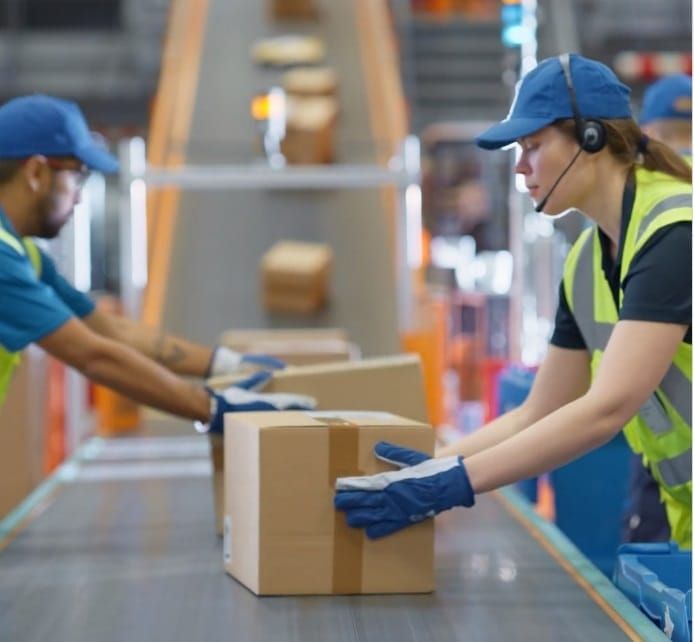
Fulfillment is often described as a set of tasks: pick the item, pack the box, print the label, hand it to the carrier. But underneath those tasks is something deeper and far more important: flow.
Flow is the movement of an order from the moment it becomes ready to fulfill until the moment it leaves your hands. Every order is on a journey. Every step adds time. Every delay adds friction. And every moment of friction compounds across the day, the week, and the entire business.
Understanding flow is the foundation of fulfillment intelligence.
Why Flow Matters More Than Tasks
Most merchants think in terms of tasks:
• “Did we pick everything?”
• “Did we pack everything?”
• “Did we ship everything?”
But tasks only tell you what happened.
Flow tells you how smoothly it happened.
Flow reveals:
• where orders slow down
• where work piles up
• where operators get stuck
• where the system becomes unstable
• where customers feel the delay
And the impact of poor flow is not small — it is measurable, costly, and often invisible until it’s too late.
The real cost of unmanaged flow
Industry research consistently shows:
• Late or inconsistent fulfillment is the #1 driver of negative reviews in ecommerce
• 69% of customers say they won’t shop again after a late delivery
• 1–3 days of extra internal delay (hidden inside fulfillment) is more common than merchants realize
• Every additional day in fulfillment reduces repeat purchase probability by 12–18%
• WIP spikes correlate directly with overtime, errors, and rework
• Operators lose 20–40 minutes per shift to searching, waiting, or redoing work caused by flow instability
• Businesses with stable flow see 2–5× higher order throughput without adding staff
Flow isn’t a “nice to have.”
It is a profit lever, a retention lever, and a customer‑experience lever.
When you manage flow, you reduce cost, increase speed, and create a predictable operation.
When you ignore flow, the system becomes chaotic — and chaos is expensive.
The Fulfillment Flow Model
Every fulfillment operation, no matter how simple or complex, can be described as a sequence of steps:
Order → Pick → Pack → Ship
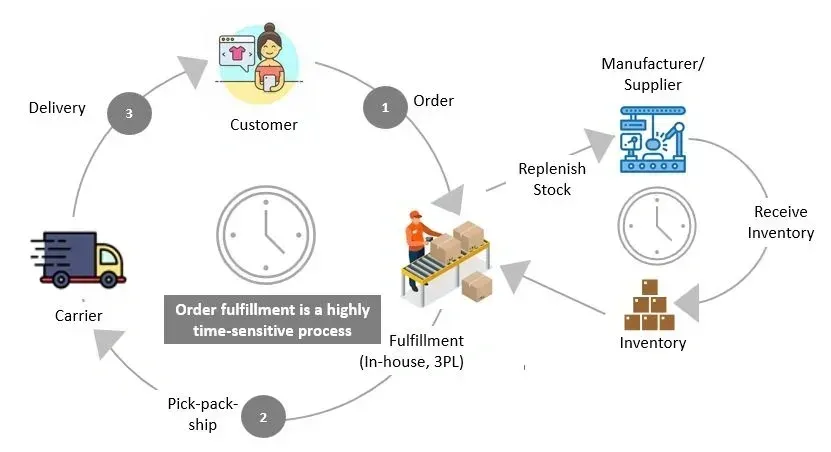
Some merchants add more steps. Some collapse steps. Some run parallel flows. But the underlying structure is always the same:
An order moves through a series of states.
Each state takes time.
The time between states is where the truth lives.
This is the essence of flow intelligence.
Events: The Building Blocks of Flow
Flow is measured through events — the moments when an order enters or exits a step.
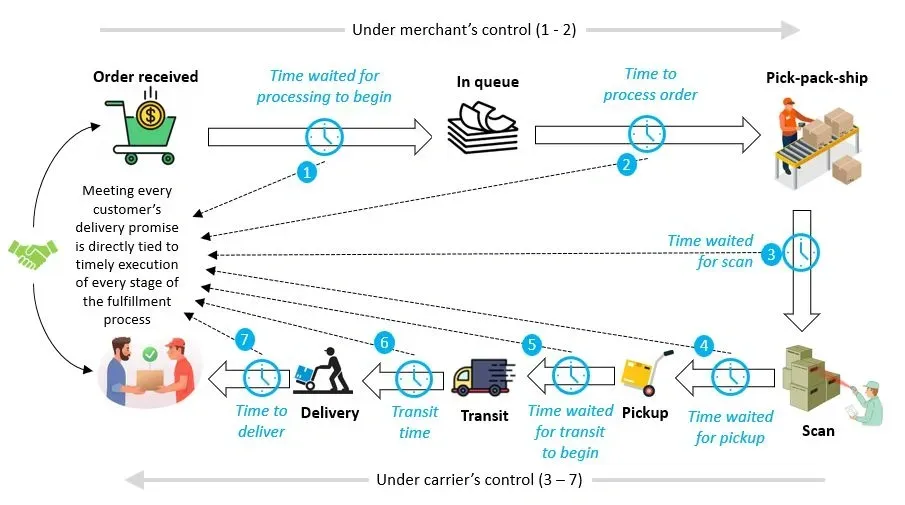
Examples:
• Pick started
• Pick completed
• Pack started
• Pack completed
• Label printed
• Order handed to carrier
Each event is a timestamp.
Each timestamp becomes a data point.
And when you connect those data points, you see the shape of your fulfillment flow.
Why Flow Breaks Down
Flow breaks down for predictable reasons:
• too many orders entering the system at once
• not enough capacity at a step
• uneven operator performance
• batching behavior
• missing items
• unclear priorities
• rework or corrections
• waiting for materials or packaging
When flow breaks, cycle time increases.
When cycle time increases, customer experience suffers.
And when customer experience suffers, retention drops — often permanently.
Flow as a System, Not a Checklist
Fulfillment is not a checklist you complete.
It’s a system you stabilize.
A stable system:
• moves orders smoothly
• keeps WIP (work in progress) under control
• avoids spikes and droughts
• maintains predictable cycle times
• recovers quickly from disruptions
A system like this feels calm.
Operators feel in control.
Customers feel the difference.
And the business feels the impact in lower costs and higher repeat purchases.
Why This Lesson Matters
Everything else you’ll learn — cycle time, CAR, scatter plots, cumulative flow, KPIs — builds on this foundation.
If you understand flow, you understand fulfillment.
If you understand fulfillment, you can improve it.
And if you can improve it, you can scale it.
Flow is the difference between a business that constantly reacts and a business that consistently delivers.